

Omega-3 for dog skin, coat and itching.
If your dog scratches all day, sheds in clumps and carries a coat that has lost its shine, food is one of the first places to look. Many everyday diets tip the omega balance in the wrong direction and skin and coat are often where you notice it first. Marine omega-3 helps put that balance back.
Why so many dogs are low on marine omega-3.
Fats are not all the same. Dogs need both omega-6 and omega-3 and the ratio between them matters. Most kibble leans heavy on omega-6 from plant and poultry fats and light on the marine omega-3 that comes from oily fish. That is not a fault in one bag of food. It is simply how most dry diets are built.
When the balance sits too far towards omega-6, skin and coat tend to show it: itching, dryness, heavy shedding and a dull, tired-looking coat. Burron and colleagues (Journal of Animal Science, 2024) review how the balance of omega-6 and omega-3 fats shapes inflammatory signalling in dogs and cats. Adding marine omega-3 helps bring the ratio back towards where your dog does better.
What EPA and DHA actually do for skin and coat.
The two omega-3 fats that matter here are EPA and DHA and both come from marine sources rather than plants. Your dog cannot make them in any useful amount, so they have to come in through the diet.
Once they are on board, EPA and DHA give the body building blocks it uses to regulate inflammatory signalling and to support the skin barrier. Mueller and colleagues (Journal of Small Animal Practice, 2004) tested that effect in dogs with atopic dermatitis over a ten-week course of supplementation. A healthy barrier holds moisture in and keeps everyday irritants out, which is exactly what a dry, flaky, itchy coat is missing. In short, omega-3 helps maintain the skin barrier, supports a balanced inflammatory response and helps support coat condition and shine.
Omega-3 supports skin and coat health. It is not a treatment for any skin condition. If your dog has raw, broken, weeping or rapidly worsening skin, see your vet.
Signs an owner tends to notice.
You know your dog better than any chart does. These are the everyday signs that often point to skin and coat that could use more support.
- Persistent scratching, licking or nibbling at the skin
- Dry or flaky skin, sometimes with visible flakes in the coat
- Heavy or constant shedding beyond the usual seasonal turnover
- A dull, dry coat that has lost its natural gloss
- Recurring patches of irritation that keep coming back
None of these on their own tell you the cause. Plenty of things affect skin. What they do tell you is that skin and coat are under strain and that supporting them from the inside is worth doing alongside anything your vet advises.
If you have not yet worked out what is behind the scratching, start by ruling out the common causes of itching in a sensible order. Parasites, recent changes and contact irritants account for most of it, and none of them are fixed by anything in the bowl.
How much omega-3 your dog needs.
Support depends on getting enough EPA and DHA in every day, matched to your dog's size. Too little does very little. The right daily amount, kept up over time, is what gives skin and coat something to work with.
This is where the numbers matter more than the label on the front of a bottle. What counts is the actual EPA and DHA per serving, not the total oil. For the full picture on daily amounts by weight, read how much omega-3 your dog needs.
Each 2ml pump of OmegaMax™ gives you a known amount to work from.
| Per 2ml pump | Amount |
|---|---|
| EPA | at least 324 mg |
| DHA | at least 214 mg |
| Combined EPA and DHA | at least 538 mg |
Because the concentration is stated, you can dose to your dog's weight instead of guessing. A small dog needs far less than a large breed and matching the amount to the dog is the whole point.
Set realistic expectations on timing.
This is the part owners most often get wrong. Omega-3 is not an overnight fix and anyone promising one is overselling. EPA and DHA build up in the body and support skin and coat gradually, so results come from daily use held steady over weeks.
A fair way to think about it is one bottle at a time. Give it every day at the right amount, keep going and judge the coat after several weeks rather than after several days. Coat shine and skin comfort tend to be slow, quiet changes, not sudden ones. Consistency is doing more work here than any single big dose ever could.
What to look for in a fish oil.
Not every fish oil is worth feeding. A few things separate a serious one from a filler product.
- Stated EPA and DHA: you should be able to see the exact milligrams per serving, not just total fish oil.
- Marine source: the omega-3 that matters for dogs comes from oily fish, not from flax or other plant oils.
- Quality of the oil: how the oil is sourced and purified affects freshness and how well your dog takes to it.
OmegaMax™ uses oil from wild-caught anchovy, sardine and mackerel, purified in Iceland and is made with Friend of the Sea certified fish oil. Clean, fresh oil is easier to feed day after day and daily feeding is what makes the difference.
Fitting it into daily feeding.
The practical side is simple. Pump the right amount onto food once a day, at the same meal, so it becomes routine. A pump onto wet food or over kibble is usually enough for most dogs to take it without fuss. The easier you make it to remember, the more likely you are to keep the streak going and the streak is what supports the coat.
Keep the bottle sealed and stored as directed so the oil stays fresh. Fresh oil in, every day, is the pattern you are aiming for.
Ready to work out the right daily amount for your dog. Put in your dog's weight on the dosing calculator and it will show you how many pumps to give, so you can start supporting skin and coat with the correct amount from day one.
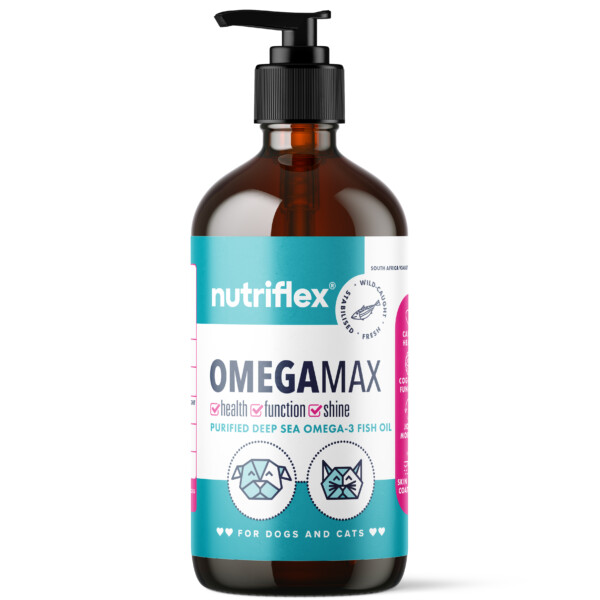
OmegaMax™ 250 ml liquid
538 mg combined EPA and DHA in every 2 ml pump. Wild-caught marine oil, purified in Iceland.
R395 R465
This is a nutritional product and is not intended as a substitute for veterinary products or advice. Speak to your vet before starting higher targeted amounts, or for any pet with an existing health condition.