

Omega-3 for dogs: the benefits, explained.

Written by Team NutriFlex® · Reviewed by Sharon Milani, Co-founder and Product Development Director, SmartPack PTY Ltd · Published 22 July 2026 · Last updated 24 July 2026
Omega-3 fatty acids are among the most useful daily supplements you can give a dog. The two that matter, EPA and DHA from marine sources, support your dog's skin and coat, joints and mobility, heart, brain, eyes, kidneys and a balanced inflammatory response. Fed at the right amount every day, omega-3 helps a dog look, move and age better.
Here are the main benefits of omega-3 for dogs at a glance:
- Calmer, less itchy skin and a glossy coat
- Easier movement and joint comfort, especially in older dogs
- Support for normal heart and circulation
- Brain and eye development in puppies, and sharper cognition in senior dogs
- Support for kidney health as part of a balanced diet
- A balanced, well-regulated inflammatory response
What omega-3 is and why your dog needs it.
Omega-3 is a family of fats, not a single nutrient. The two that do the work in dogs are EPA and DHA, the long-chain omega-3s found in oily fish. Your dog cannot make these in any useful amount, so they have to come in through the diet. Most modern dog food is heavy in omega-6 and light in marine omega-3, and that imbalance is where many everyday problems begin. Adding EPA and DHA brings the balance back. For the detail on each fatty acid, read EPA vs DHA.
The benefits of omega‑3 for dogs, one by one.
Skin and coat.
This is the benefit owners notice first. EPA and DHA support the skin barrier and a balanced inflammatory response, which helps calm itching, reduce heavy shedding and bring back coat shine. In a controlled trial published in the Journal of Small Animal Practice, Mueller and colleagues (2004) measured the effect of omega-3 fatty acids on dogs with atopic dermatitis over ten weeks. For the full picture, read omega-3 for dog skin, coat and itching.
Joints and mobility.
Omega-3 supports joint comfort and everyday movement, which matters most for older dogs and larger breeds. Roush and colleagues (JAVMA, 2010) used force-plate measurement to evaluate weight bearing in dogs with osteoarthritis fed fish-oil omega-3s, one of the few objective outcome measures in this area. Joint support needs a higher daily intake than general maintenance, so the amount is worth getting right. See omega-3 for dog joints and mobility.
Heart and circulation.
EPA and DHA support normal cardiovascular function as part of a balanced diet. A steady daily intake helps look after your dog's heart through life.
Brain and cognition.
DHA is a structural fat, concentrated in the brain, eyes and nervous system. In puppies it supports the developing brain and eyes. In senior dogs it helps maintain cognitive sharpness as the years add up.
Kidney health.
Marine omega-3 supports kidney health as part of a balanced diet. This is one reason veterinary nutrition guidance often includes EPA and DHA in the daily plan for older dogs.
Eyes and vision.
DHA is a building block of the retina, so a good supply supports eye and vision health, again most important at the two ends of life, in growing puppies and ageing dogs.
A balanced inflammatory response.
Inflammation is not always bad. It is part of normal repair and immune defence. The problem is persistent, poorly regulated inflammation. EPA and DHA give the body the building blocks it uses to keep that response balanced, which underpins the skin, joint and whole-body benefits above.
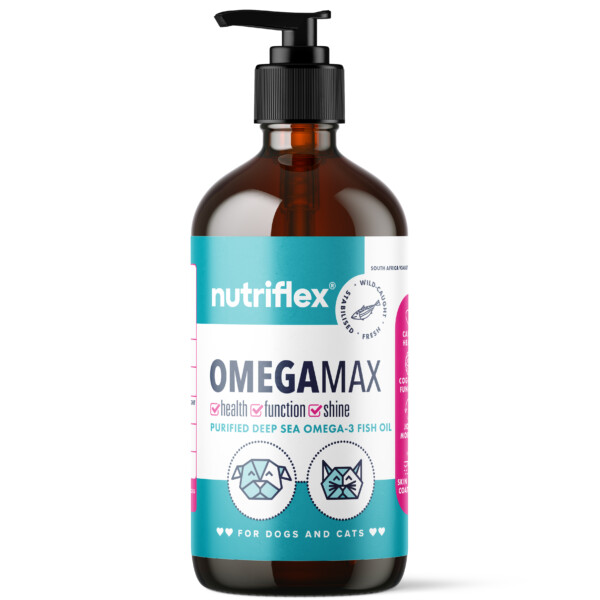
OmegaMax™ 250 ml liquid
538 mg combined EPA and DHA in every 2 ml pump. Wild-caught marine oil, purified in Iceland.
R395 R465
Signs your dog could benefit from more omega-3.
You know your dog better than any chart. These are the everyday signs that often point to a dog who would do well on more marine omega-3:
- Persistent scratching, licking or biting at the skin
- Dry or flaky skin, or a dull, dry coat
- Heavy shedding beyond the usual seasonal turnover
- Stiffness, or slowing down on walks and stairs
- Age-related changes in sharpness or energy
None of these prove a cause on their own. What they tell you is that supporting your dog from the inside is worth doing, alongside anything your vet advises.
How much omega‑3 does a dog need.
The benefit depends on getting enough EPA and DHA in every day, matched to your dog's size and goal. A dog on everyday maintenance needs far less than a dog on targeted joint support. Rather than guess, work it out by weight in the dosing calculator, or read the full breakdown in how much omega-3 your dog needs.
The best source of omega-3 for dogs.
Not all omega-3 is equal. Plant sources like flaxseed give ALA, which dogs convert into usable EPA and DHA very poorly, as Burron and colleagues set out in their 2024 review in the Journal of Animal Science, so they fall short (see fish oil vs flaxseed). Among fish oils, a concentrated small-fish oil delivers more EPA and DHA per dose, from a cleaner source, than most salmon oil (see fish oil vs salmon oil). OmegaMax™ supplies preformed EPA and DHA from wild-caught anchovy, sardine and mackerel, purified in Iceland and made with Friend of the Sea certified fish oil, with the EPA and DHA declared per pump so you always know what your dog receives.
How long until you see the benefits.
Omega-3 is not an overnight fix. Coat shine often shows first, at around three to four weeks, with skin and joint benefits building over six to twelve weeks of daily use. For the full week-by-week picture, read how long omega-3 takes to work in dogs.
Common questions.
What are the benefits of omega-3 for dogs? Omega-3, mainly EPA and DHA from marine sources, supports skin and coat, joints, heart, brain, eyes, kidneys and a balanced inflammatory response. Fed daily, it helps a dog look, move and age better.
Is it safe to give a dog omega-3 every day? Yes. Daily use is how omega-3 works, since EPA and DHA build up over time. Dose by weight, introduce it gradually, and check with your vet for a dog with an existing health condition.
Can omega-3 help an itchy dog? It supports the skin barrier and a balanced inflammatory response, which is why it is so often used for dry, flaky or itchy skin. Give it daily for several weeks and judge the coat over time.
How much omega-3 should I give my dog? Dose by body weight, and use more for targeted skin or joint support. The dosing calculator turns your dog's weight into a simple daily amount.
What is the best omega-3 for dogs? A concentrated marine fish oil that declares its EPA and DHA per dose, from small wild-caught fish, protected against oxidation. That is exactly how OmegaMax™ is built.
This is a nutritional product and is not intended as a substitute for veterinary products or advice. Speak to your vet before starting higher targeted amounts, or for any dog with an existing health condition.